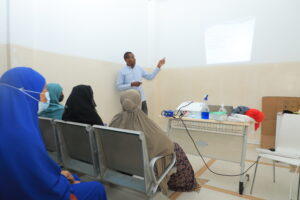
Dr. Sumait Hospital recently conducted an important Infection Prevention and Control (IPC) training for the cleaning staff of Degaanka Dhowr Cleaning Services, who are responsible for maintaining cleanliness and environmental hygiene within the hospital.
This training served as the first phase of a series of capacity-building sessions designed to strengthen safety measures across the hospital environment. The initiative reflects Dr. Sumait Hospital’s ongoing commitment to protecting not only patients, but also healthcare workers, support staff, visitors, the wider community, and the surrounding environment.
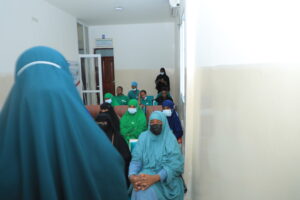 In healthcare settings, infection prevention is a shared responsibility, and cleaning personnel play a vital role in maintaining safe and hygienic spaces. Their daily work directly contributes to reducing the spread of infections, supporting quality patient care, and ensuring that the hospital remains a safe environment for everyone. For this reason, equipping cleaning staff with the right knowledge and practical skills in IPC is both necessary and impactful.
The training focused on improving awareness and understanding of essential infection prevention practices, with particular attention to the importance of cleanliness, safe handling procedures, and the prevention of contamination within hospital spaces. By strengthening the capacity of frontline environmental cleaning staff, the hospital is taking a practical step toward improving infection control standards and minimizing avoidable health risks.
 This initiative also highlights the importance of recognizing every member of the hospital workforce as a key contributor to patient safety. A clean and well-managed healthcare environment is fundamental to quality care, and investment in staff training is an investment in better health outcomes for all.
Through this first training phase, Dr. Sumait Hospital continues to demonstrate its dedication to promoting health awareness, strengthening hospital safety systems, and building a healthier and more secure environment for patients, staff, the community, and the environment at large.